Last updated: October 28, 2026
Where we use artificial intelligence
Most memoir services use AI somewhere. This page says exactly where we do, and where we don't, in full and with no small print.

From your voice to your page
01
You say it
Out loud, in your own words. Your recording is kept.
02
You check it
Transcription sometimes mishears a word, above all a name. You correct it before anything is printed.
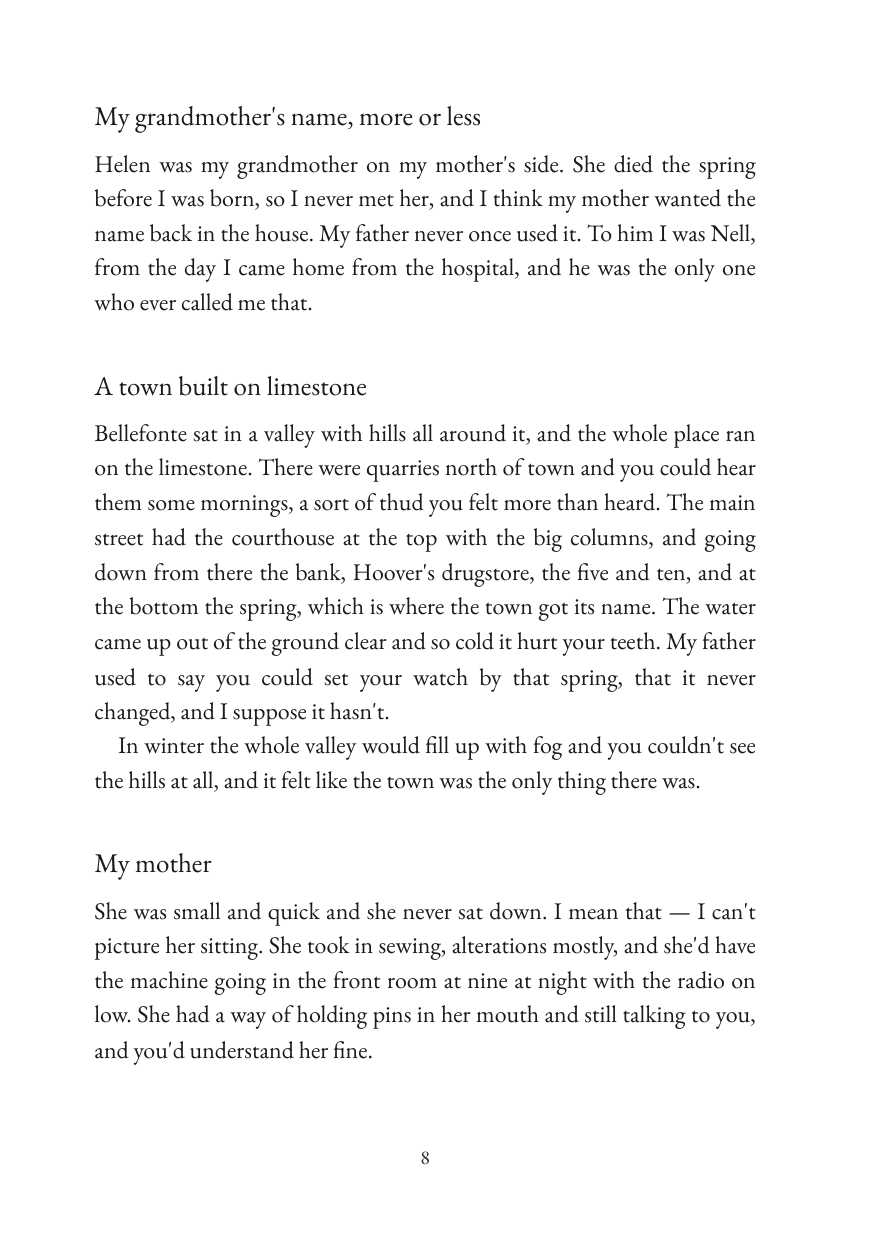
My father never once used it. To him I was
NailNell, from the day I came home from the hospital, and he was the only one who ever called me that.03
It is printed as you said it
The same words, in the same order. Nothing rewritten.
The page
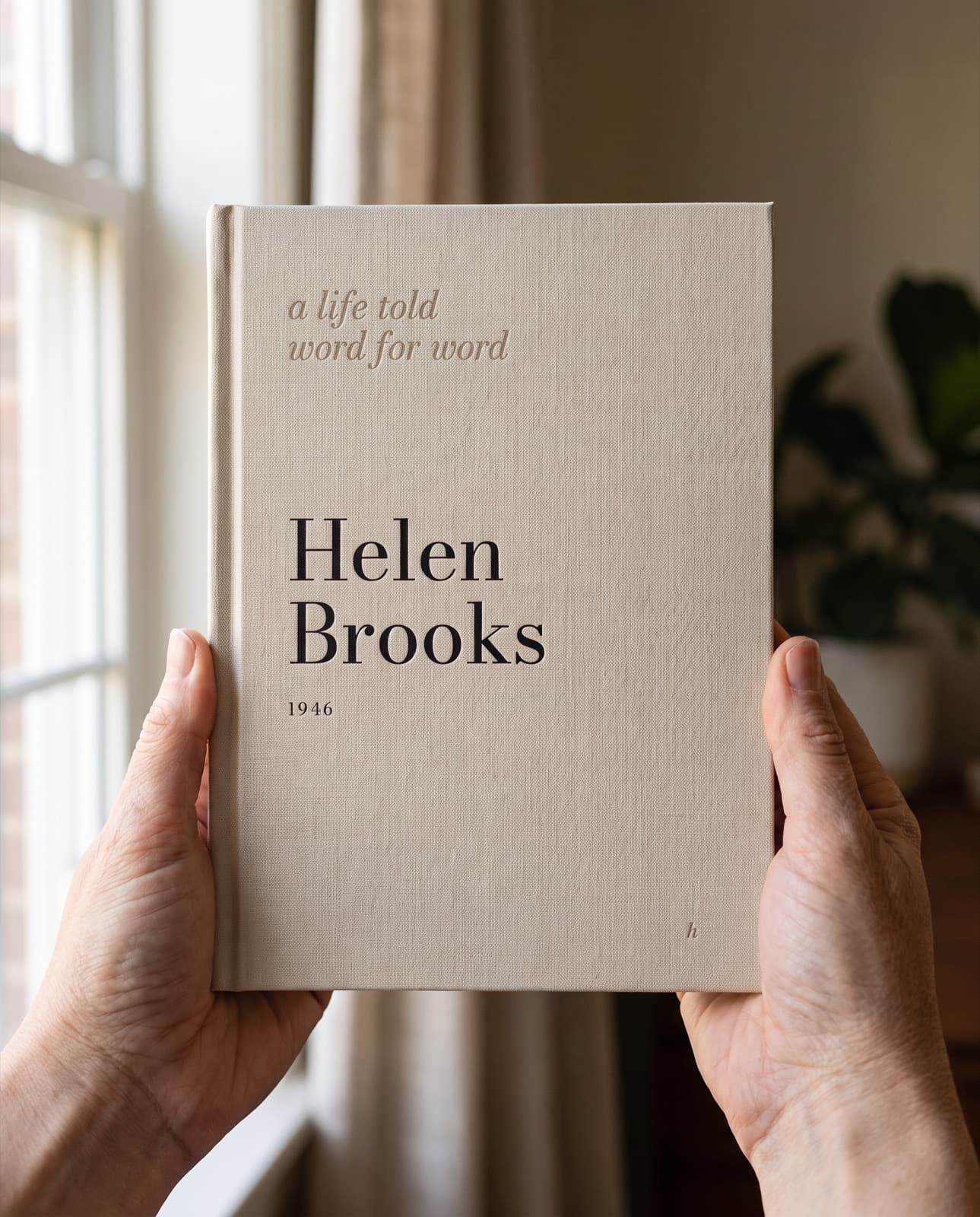
Helen Brooks is an invented narrator, and the misheard word is an example.
01
We never write in your voice
No machine drafts, rewrites, lengthens, shortens or polishes your answers. What gets printed in your book are your words, exactly as you said or wrote them. When you save an answer, a spelling check that runs in your own browser, with no AI and nothing sent anywhere, points out typos, and you decide whether to fix each one.
This is not a matter of style. A sentence your mother would never say is spotted instantly, and a book of memories has to still hold up as a record thirty years from now. If we ever offer a written-up version, it will be a different product, under a different name, and it will say on the cover that a machine wrote it.
02
Where we do use it, and what for
To transcribe what you say. If you answer by speaking, a speech recognition system turns your audio into text. Its only job is to write down what it hears. We always keep the original recording, so you can check any sentence against it.
No machine writes the title of each answer. Every answer carries a short first-person title, the same for everybody for that question (“The great love of my life”), and those titles make the contents page. No AI invents them or takes them from what you say. If a machine ever suggests titles taken from your own words, we'll say so here first.
We don't analyze your photos. No machine of ours looks at them, recognizes faces or reads anything into them.
That is all. There is nothing else.
03
We do not train models on what you tell us
Your answers, your audio and your photographs are not used to train any artificial intelligence model, ours or anybody else's. They are not sold, not licensed and not shared with third parties for that purpose.
Transcription is done by AssemblyAI, and we chose them on that condition: in our account, their use of your audio to train their models is switched off.
04
Transcription gets things wrong sometimes
No speech recognition system is perfect, and proper names, small villages and family words are exactly what it handles worst.
That is why you can correct any transcription before it is printed, and why we keep your audio: the recording is what counts, not the text.